
Developer · Villa subdivision
Developing a villa subdivision in Marrakech: read this before you start
Are you considering a villa or apartment subdivision project? Before you take the plunge, I’d strongly advise you to read what we have to say.
There is so much to say about this kind of project — the good and the bad alike! Far too many factors can turn a dream into an endless nightmare, creating no end of problems, both for you and for your buyers.
That’s exactly why we think twice ourselves before committing to a subdivision project: we scrutinize everything, right down to the smallest detail. While it’s certainly achievable, we unfortunately run into very serious problems far too often. Let me explain why.
The risky model: “off-plan” sales
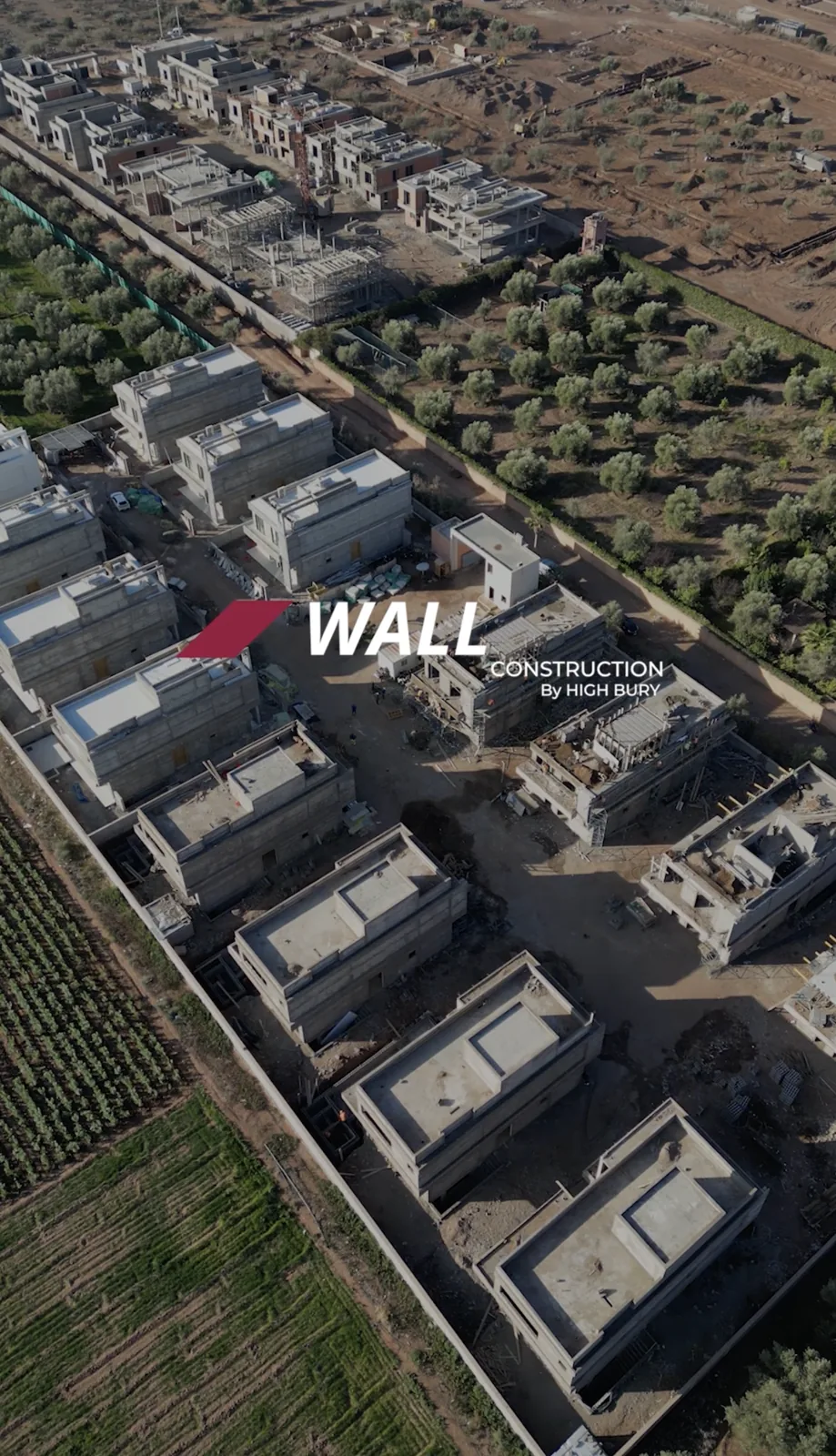
Most subdivision projects today rest on an economic model that is risky and very poorly regulated: selling “off-plan”.
The principle is simple: a group of investors buys a plot of land with the option to build several villas on it according to the plot’s planning brief (SD1, GH2, etc. — see the local planning regulations).
Once that plot is bought like any ordinary build, an architect draws up the plans, the permits, and so on. All of that already takes a good deal of time. Then, “logically,” most “developers” rush into marketing the units — without really worrying about what matters most.
Before selling: is everything truly buttoned up? Do we have a clear view of the cost, the timeline, the quality of our subcontractors? Trust me: 90% of the time, the answer is no.
You don’t sell before you’ve costed it out
A project requires very specific oversight and a thorough cost study across the entire journey. What you pay 10 dirhams for in 2024, you’ll pay 11 dirhams for in 2025, then 12 dirhams in 2026 (roughly speaking — price swings depend on far more factors than that, but let’s keep it simple). Especially in construction, where costs rise almost twice a year, by at least 1, 2, or 3%.
You don’t sell first and draw up the quotes afterward.
Everything must be calculated: a risk margin, of course, but also rising prices, VAT, taxes, site infrastructure works, losses… all so you can hope to turn a profit and see the project through. The selling price has to match the real cost of production! And unfortunately, far too many people treat this lightly.
90% of problems stem from this.
A subdivision is a real profession
Management is often poorly organized, the contractors poorly chosen, the contracts poorly drafted. Investors are badly advised and dive into the adventure hoping it will all work out.
Yet running a subdivision project is a real profession! Investing isn’t enough. The financial side is one thing; the operational side is quite another. Most subdivision “developers” don’t necessarily have genuine expertise — though some do! And it shows immediately… on the ground.
The spiral of delay
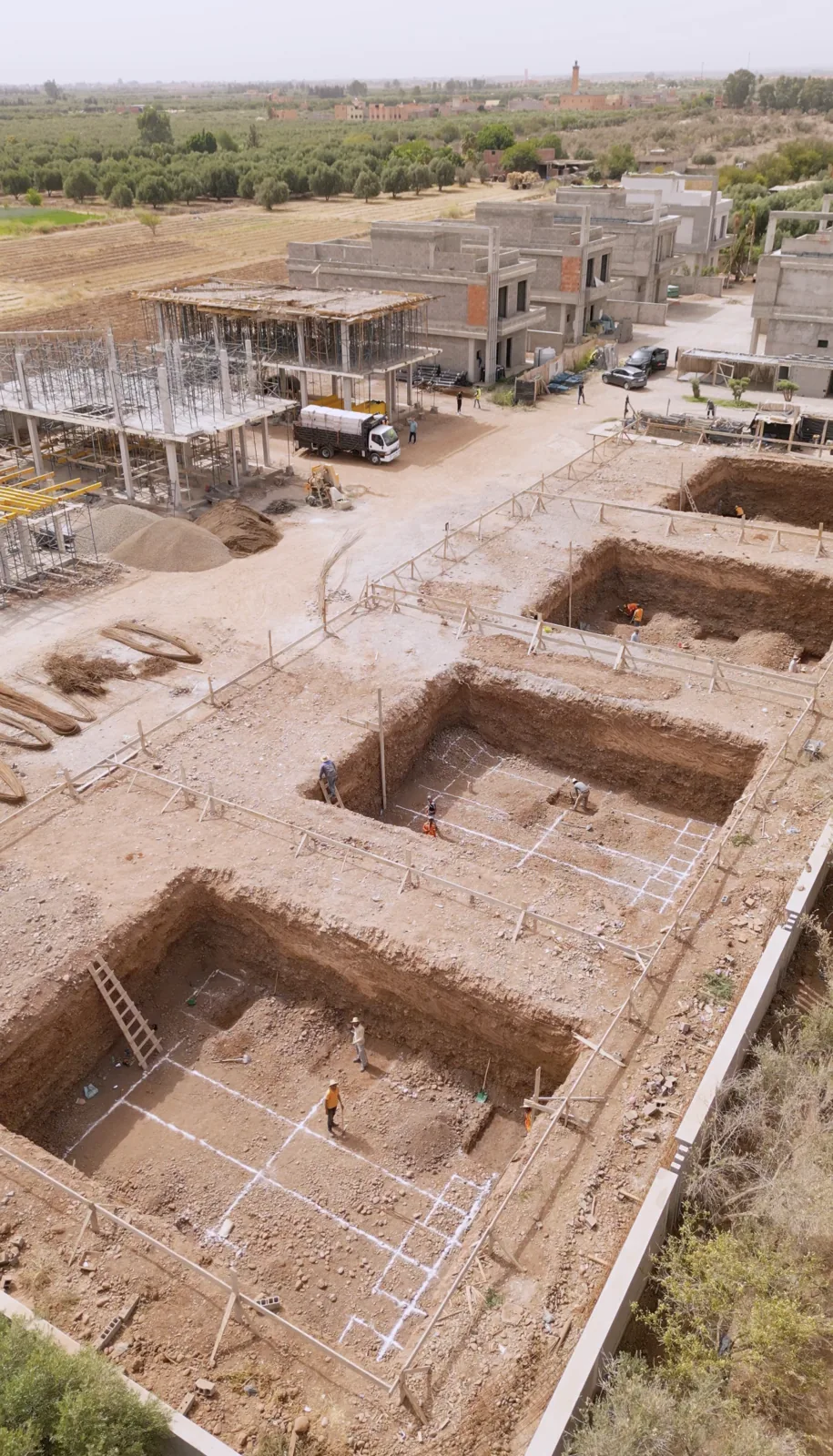
Projects fall enormously behind schedule, and that’s where the spiral begins. Buyers start to complain, and so do the subcontractors: little by little, the budget tightens, buyers lose confidence and drag their feet on payment.
(A word of caution: there are also bad payers among the buyers — let’s not mince words.) If the subcontractor doesn’t make progress, the buyer doesn’t pay, because there is normally a payment schedule in place… It’s an endless cycle, leading to all-out conflict. That’s a genuine observation, from our own experience.
It’s possible — with the right people
Fortunately, with a team of experienced professionals who, above all, are well organized, it’s entirely possible to deliver profitable projects in Morocco!
We can support you on your project — provided everything is clear and viable. Bet on hands-on and theoretical experience, not just purely theoretical “advisors”: to drive a vehicle, you have to be inside it, feeling its momentum.
I hope I’ve made myself clear. 😉
Our experience, in full transparency
Our first subdivision project was a deeply enriching experience. We took our lumps on it — but we managed to turn the losses into lessons for the future. The “investors” meant well and had bet on very high-quality builds for their buyers; unfortunately, a host of problems (like those mentioned above) have made us, from now on, extremely vigilant about this kind of project. I was able to catalog and understand the real causes and requirements behind a project’s success — or its collapse — and so find solutions for the future.
Make the most of it: get in touch with us about your project!