
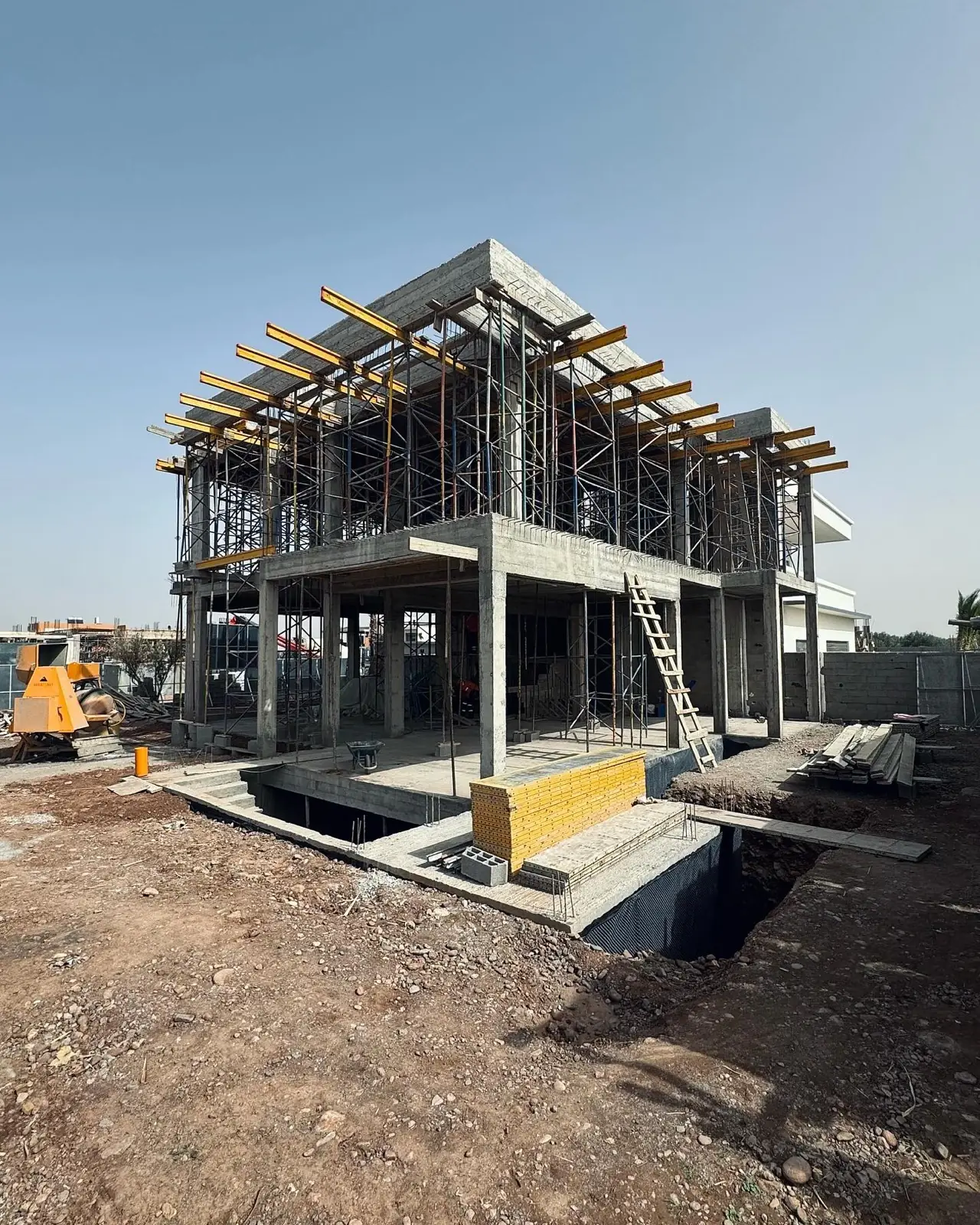
The Guide · WALL Construction
Successfully building
your villa
Want to get your construction project right? I'm going to help you. Here is the experience I've built up on site — the kind that can save you years of experience in just a few minutes.
scroll ↓10 minutes of reading against €100,000 in savings, tempting?
Thought up and written by me… and not by an AI 😁 — admit it surprises you, in 2026! Yes, I know it tempts you. I've tried to keep it simple, direct and useful. Go on, enjoy the read.
No spin — let's get started.
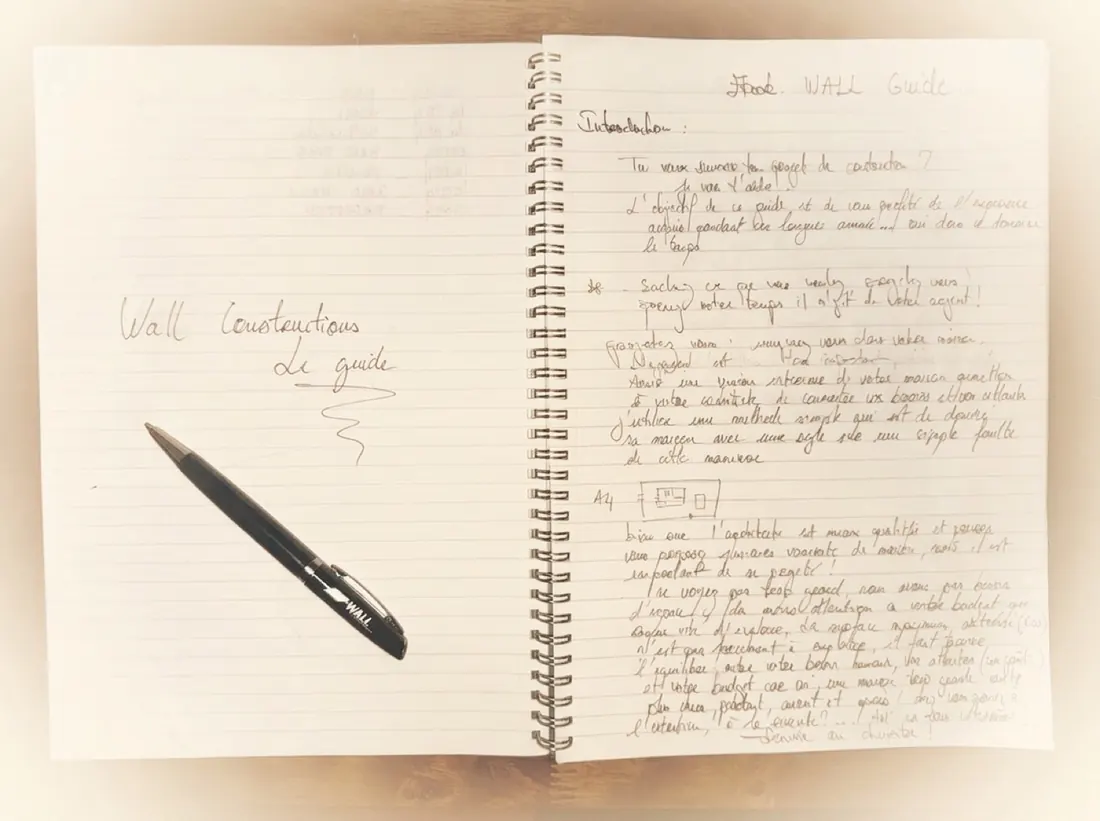
First of all
The goal of this guide is simple: to let you benefit from the experience built up on site. Years of mistakes and problems that, over time, have turned into solutions and into experience of real value.
Get an honest and objective analysis from a self-taught and passionate builder: I sincerely believe I can save you time and money — and all of it for free.
Before posting this guide on my site, I wrote it trying to be as simple and direct as possible, so it would be pleasant and not too long to read… otherwise you'd lose interest. Take your time — it's your money.
"You only have to love what you do to perfect what you love. — BS"I had to sign it… it's too good. 😁
Land and construction — your compass
The budget & the right surface area
Do everything in line with your budget. It's the best way to finish your project just as you imagined it. If you want to see the light at the end of the tunnel, I'd bet on a fully loaded 205 with wheels rather than a Clio without 😉. And by making the right choices, you'll even manage to do better than some who blew their budget. Here's my advice.
Let's start with the surface area
Most of the time, plots have a FAR of around 30%. The FAR is the Floor Area Ratio: it indicates the buildable area allowed relative to the size of the plot.
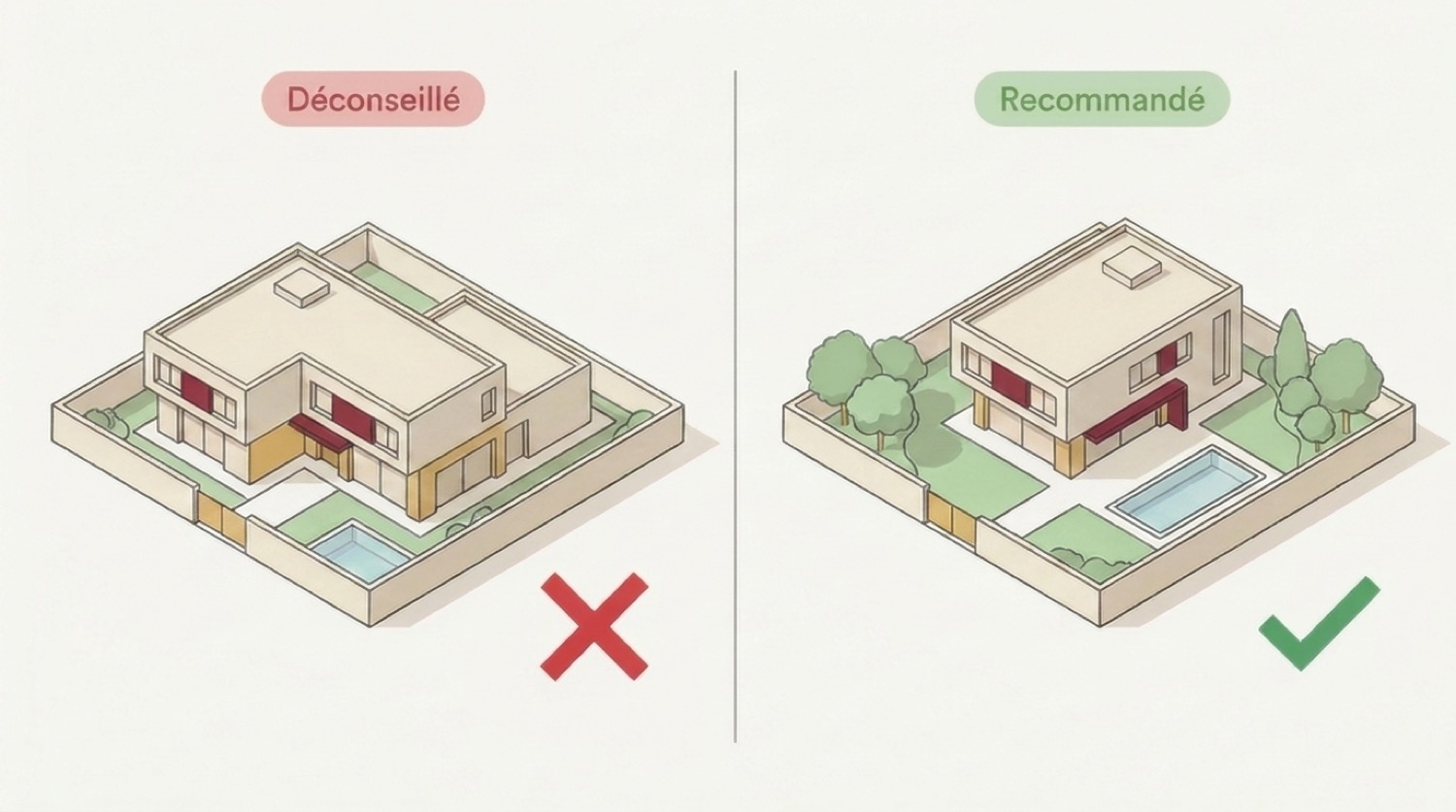
But be careful: just because you're allowed to build to the maximum doesn't mean you should. It's even one of the most common mistakes. Many use 100% of the allowed FAR, without asking whether that area is actually useful, pleasant to live in or consistent with the land.
The result? Houses that are too massive, a sacrificed garden, a concreted-over feel, overlooking everywhere, and above all money spent on square metres that don't necessarily bring more comfort.
"Building a boat in a swimming pool just doesn't fit."
The goal isn't to build as big as possible. A well-thought-out house, well proportioned, with a beautiful garden, good circulation, fine materials and real privacy will often be worth more than a bigger but poorly balanced house.
The trick is simple: start from your real needs, not from the maximum allowed. Ask yourself how many rooms you really use, how you're going to live outdoors, where the garden, the pool and the trees will be, where the light will come from, and above all: where your privacy will be.
📌 My advice, in numbers
Don't automatically use 100% of the allowed FAR. Depending on the size of the plot, the surroundings, the orientation and your budget, reducing the footprint by 5 to 15% can completely change the quality of the project. Sometimes, building a little less lets you live a lot better: more garden, more setback, more breathing room, more privacy — and the budget saved can go back into better materials, a better finish, better landscaping. I prefer quality over quantity.
📌 The basement trap
Think twice before including a basement. It's a real comfort, sometimes a very good option, but it's not automatic. Earthworks, concrete walls, waterproofing, ventilation, access, utilities, finishes… on average, it can increase the cost of the house by around 30%. If it has a clear purpose (gym, storage, accommodation, laundry room, plant room, parking), it can make sense. If it's there "just in case", it mostly risks hurting the budget badly.
📌 Three-sided plots
Often semi-detached villas, very attractive for surfaces below 500 m²: the layout allows a more coherent garden than a small, poorly proportioned four-sided plot. You avoid losing space in unusable setbacks, and you concentrate the garden where it's pleasant. Reducing the FAR used by 5 to 10% can give you more garden — and above all avoid putting the pool right against the wall.
📌 Four-sided plots
Better suited to surfaces above 500 m²: more independence, more orientation, more perceived value. But beware of excess: beyond around 130 m² of footprint on a plot that's too small, you create the opposite effect — a house that's too dominant, narrow setbacks, the pool against the wall, little greenery. A villa is a balance between the built, the void, the light, the greenery and outdoor life. Buying a house so the neighbour can watch you swim from his balcony isn't what you want 😅.
Chapter 1
Buying the land
"The choice of land shapes everything else."
The location
The choice of land depends, of course, on your budget. Things to look at: proximity to a road, whether it's within a residential development or not (and if so, with a management company), the plots under construction nearby, proximity to shops and schools. The closer you are to everything, the better, because the surroundings fill in over the years, and a well-positioned plot secures your investment. Beware of very busy roads: a quiet road will be less noisy and more comfortable.
The surface area
What matters most is the balance between built area and garden, to avoid that concreted-over, closed-in feel. There's no need for a plot that's too big: 300 to 600 m² is enough to make a very beautiful house, if the balance is respected as explained above 🙄. Corner plots are worth more: less overlooking, and more freedom for the choice of entrance. But keep in mind that more surface area also means more maintenance. The ideal size depends on your goals: living there, reselling, renting, or a bit of everything 😁.
The overlooking
Check the future overlooking, especially if there are still vacant plots nearby. An open plot is more attractive, and you'll find your privacy there. Take the time to observe the houses already built around: a plot surrounded by finished buildings is more peaceful — you won't have to put up with your neighbours' works. Also think about the state of the roads: if there are many sites to come, they'll deteriorate.
The price
The more budget you have, the more choice you have — but even with budget, many make poor choices. Prices climb near the centre and when the plot ticks all the boxes. Good news: the biggest rise has already happened, so be careful not to buy too dear. Marrakech is still a desert: the supply to come will boost well-located plots, while the others will stagnate (that's just my opinion).
Analyse
Go on Google Maps, observe the satellite evolution over recent years, the state of the roads. Avoid, as much as possible, payment plans that look too tempting: it all depends on the progress of the servicing (utilities and infrastructure). Faced with the boom in Marrakech, many investors turn themselves into developers. A nice image, a big marketing push, a smart site office and fine hoardings guarantee neither solvency nor completion (many projects don't reach completion, and that's a real shame… in my opinion, take no risks). Never be ashamed to ask the seller questions.
"Take your time. By dint of analysing and visiting, you'll come to recognise a plot with potential."
A practical tip, once you've bought your land
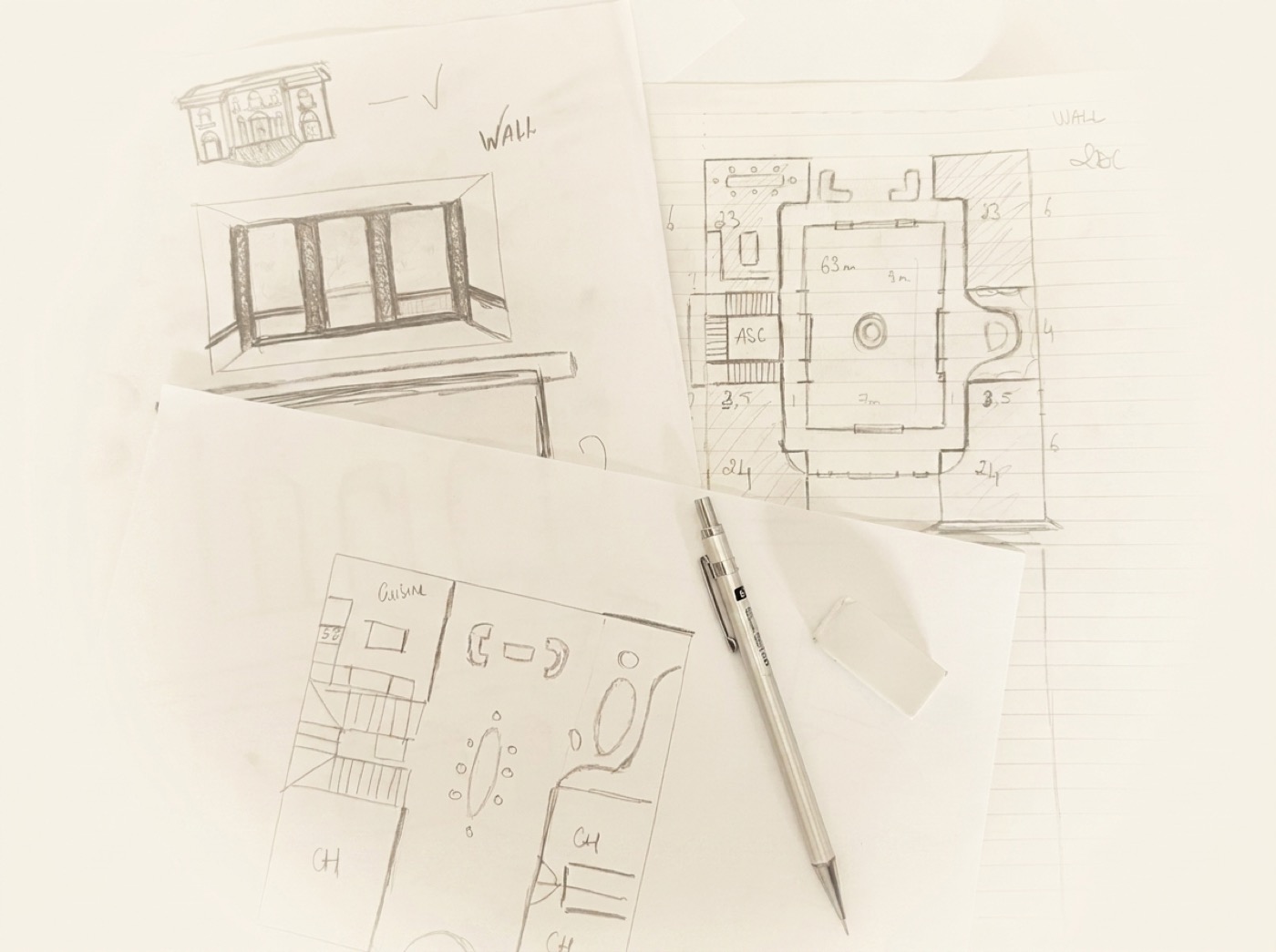
Picture yourself already in your home, on your land. A clear vision of what you want will help your architect understand your needs. My method is very simple: draw your house with a ruler, or even freehand on a blank sheet. Don't take yourself too seriously — the goal is mostly to know what you don't want. An architect told me that one day, and I found it very true (Pierre Alphonse, an excellent designer/architect, by the way).
Of course, the architect is more qualified and will be able to propose thoughtful layouts, with different variants. But what matters is to picture yourself first based on your current land. Many architects don't visit your land when they draw up your plans: they know neither your overlooking, nor the most open view, nor certain important details of the site. You'll need to bring them as much information as possible.
Chapter 2
The architect
"He's the club president. Choose him well."
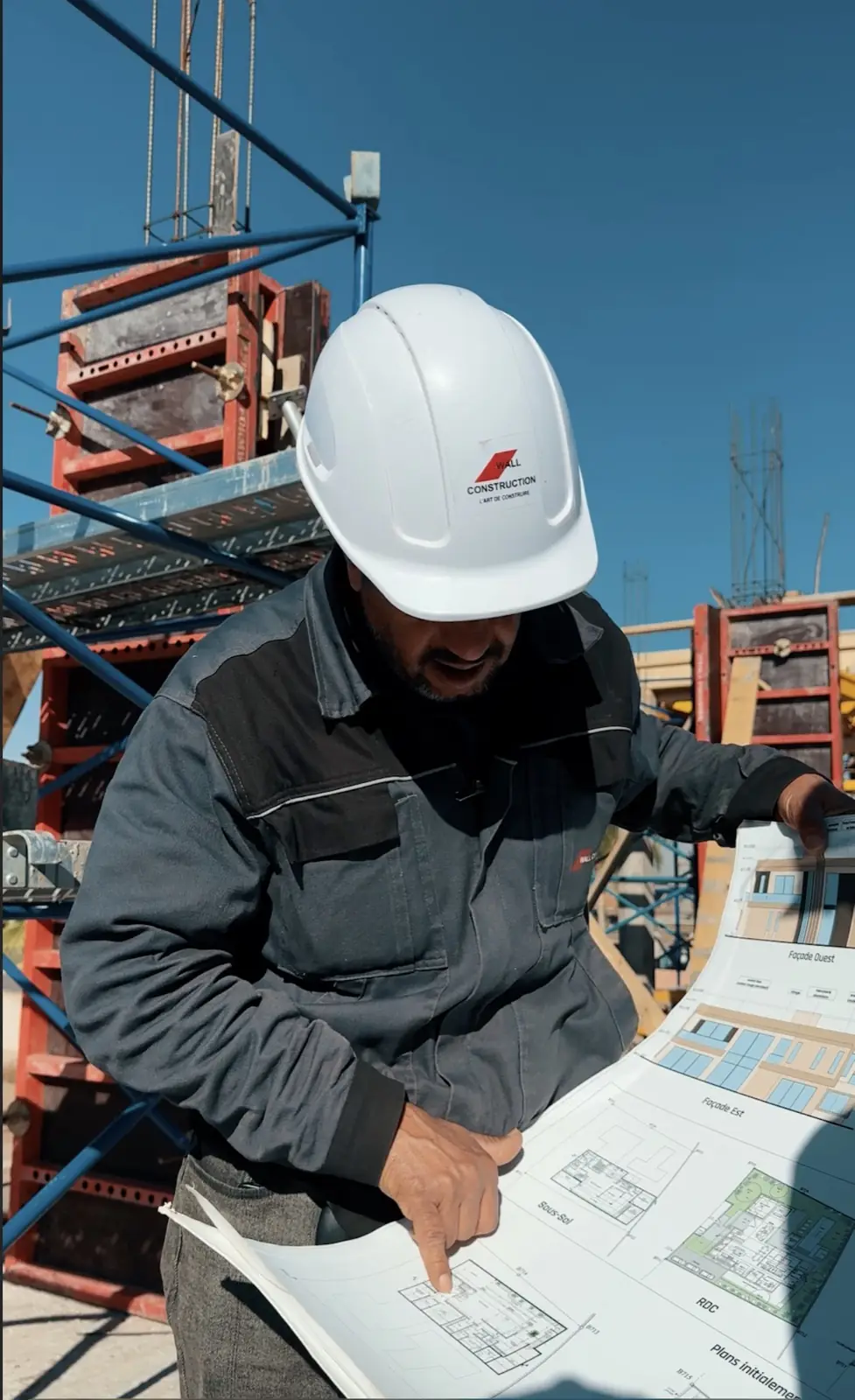
To find one, there are several ways. The first is the internet: useful for getting a first impression, but not enough. Today, many architects know very well how to present themselves — beautiful 3D renders, beautiful posts, beautiful talk. But a beautiful image doesn't guarantee a beautiful house. Look, compare, draw inspiration — but never stop at an image. A real site tells you so much more: quality of execution, level of detail, coherence of volumes, how the materials age.
My method is more instinctive, and often more reliable: go out on the ground! Visit the neighbourhoods where there's a lot of construction, observe the houses you really like, look at the hoardings (the people involved are displayed on them, including the architect). Note his name, take photos, observe the state of the site, the cleanliness, the organisation. Do it several times, until you have four or five names. Only then, make an appointment.
A recommendation is also a good lead, but verify it! Someone can be satisfied for reasons that aren't yours (price, feeling, speed, style, or simply for lack of comparison).
Then, it's a question of feeling, but not only. A project often lasts more than a year: you need a smooth relationship, but also a real level of standards. Ask for concrete completed projects, ask whether he's the one who actually draws, how he follows up on his sites, how often he visits, how he liaises with the engineering office, the inspection office and the company. The plans are important. The follow-up is even more so. Don't sign after a single meeting: go and see the others, compare, let the excitement settle.
The style
Trendy or timeless?
The very best architects know how to mix styles without creating confusion. But this skill has a price — and we come back to the 205 and the Clio: a beautiful design sometimes costs a little more at the start, but it ages much better. Today, many houses look alike (big square volumes, large bays, white façade, concrete). The real question: is it suited to your land, your life, Marrakech, your privacy, your budget? What's trendy won't be for long. The timeless, on the other hand, weathers the years better. A beautiful house should already be beautiful before it's even decorated.
Contemporary
Current lines, simple volumes, large openings, a focus on light and flow.
Modern
More geometric, often minimalist: clean lines, white, grey, concrete, glass.
Beldi
Traditional Moroccan, warm and artisanal: zellige, tadelakt, wood, wrought iron, handmade details.
Neo-beldi
Beldi modernised: you keep the Moroccan soul, with cleaner lines. Arguably one of the most interesting styles when it's done well.
Contemporary Moroccan
Moroccan identity + current design: traditional materials and certain codes, handled with restraint.
Andalusian-Moroccan
Arches, patios, fountains, zellige, symmetry, a riad atmosphere. Very elegant, but to be used in the right doses.
Minimalist
Very pared-down, few details, neutral tones. Stunning when it works; cold when it's done badly.
Mediterranean
White, stone, terraces, patios, greenery, shade. Ideal under the sun, when the proportions are right.
Kasbah / Berber
Earth, rammed earth, ochre tones, massive volumes, a mineral and rooted feel. Powerful, especially with beautiful landscaping.
Reimagined riad
The spirit of the riad — patio, intimacy, coolness — with a more contemporary layout.
Industrial
Concrete, metal, glass roofing, raw wood. Great in touches, to be used sparingly in a villa.
🛠️ Post-handover maintenance
We rarely think about it, and yet: a beautiful house needs maintenance. Waterproofing to monitor, the garden to prune, façades, pool, utilities… Plan from the design stage what will be easy — or painful — to maintain. That too is part of making the right choices at the start: making life simpler for the years that follow.
Your safeguards
The engineering office & the inspection office
Chapter 3 · The technical brain
The engineering office
It draws up the structural plans (concrete, steel) and makes execution incredibly easier. Don't skimp on it. Demand the complete file before seeing your builder: without complete plans, it's impossible to get a real quote — and it puts the company at risk, on price as on timing. Don't pay everything until you have the full set of plans. And know this: the price paid doesn't always reflect quality, here you see all kinds.
Chapter 4 · Your safeguard
The inspection office
It checks the execution of the works and the plans of the engineering office. To err is human, a second check changes everything — and you'll need it to obtain your insurances at the end of the site. Choose an approved one. It's a small budget compared to the peace of mind it brings.
The WALL approach · WALL Pilot
A successful site comes down to good communication between everyone involved. That's why, at WALL, we synchronise the architect, the engineering office and the inspection office around a single tool — WALL Pilot — and you follow the progress in real time from your client portal. When a client manages each party alone, the risk is that they work at cross purposes: delays, conflicts, nasty surprises. With us, everyone pulls in the same direction.
Chapter 5
The construction
The most costly trade, and the most important in my eyes.
"The locomotive of your project."
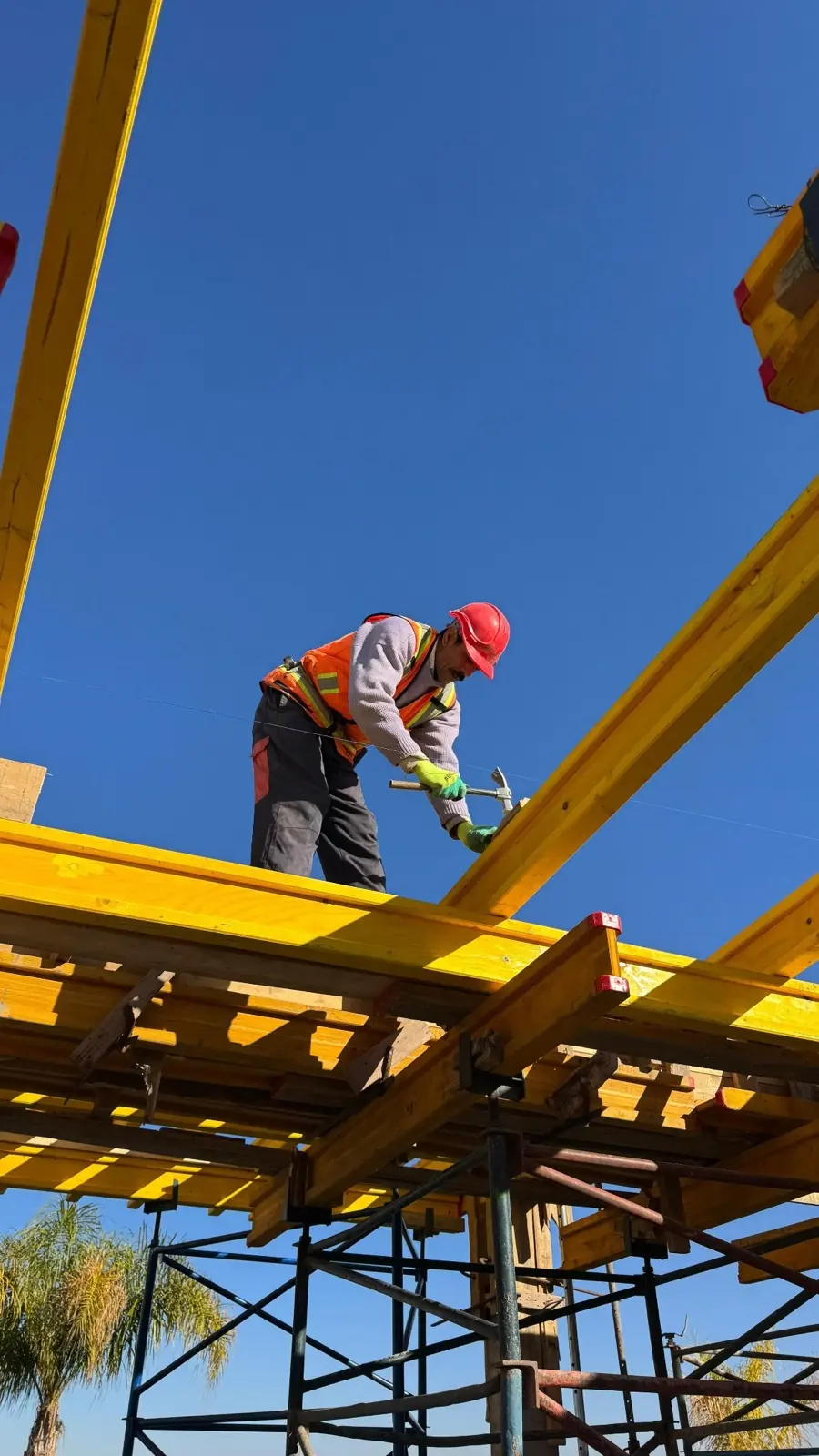
How to choose it? The same way as the architect: it's the ground that doesn't lie — and that's even truer for the builder. A beautiful build at location A doesn't guarantee the same quality at location B. A showcase site will always be polished… so visit several sites from the same builder. Two is already good. Then compare.
In a world of declining trust, in the era of "branding" where appearance no longer means being, I'd bet on know-how rather than on those who insist on making themselves known. We're in a craftsmen's field, and word of mouth remains the best advertising. You'll have understood: at WALL Construction, we bet on the long term. Looks like I'm doing branding here, or am I dreaming? 😂
More seriously: the builder is the one with the most interest in moving forward — it's over time that he earns his living. Before starting, give him every means to execute without stopping: documents, plans, water/electricity needs, financing. That way, no excuse in case of delay. Stay forgiving all the same: it's the field with the most unforeseen events.
Start on solid foundations! And there's nothing better than the setup to be ready. It's like in cooking (yes indeed, I have a past as a restaurateur… so what, are you scared? 😂 It was a long time ago, don't worry: now I prepare footings and ground beams 😂).
"A good preparation is better than a fine repair."
Beware of trap quotes
"Have you ever seen a dealer sell a car without wheels?" Your house must be insulated, protected, waterproofed, fenced. Demand a clear and complete quote that covers the entire project — not just the floor or the slab. Be wary of per-m² prices "to keep it simple": the price must be costed as close as possible to the real cost (steel, concrete, timeline, labour, formwork, ancillary costs). If the builder is at risk, so are you. Check his insurances, his track record, his solvency. A builder who isn't profitable, that's not normal.
Be wary too of the "bait quote": a company prices the house… but "forgets" the boundary wall or the waterproofing, to bill them to you later. It knows full well that the first thing you look at is the price. Analyse your quotes line by line — and beware of prices that are too low.
📌 What's a CPS?
The Special Specifications Document: a contractual document that sets the technical rules and requirements for your site (mandated materials, methods, standards, checks). It's your protection — and the builder's.
The WALL approach · WALL Solutions
At WALL, the structural work AND the second-fix work are carried out by our own teams (our technical trades are our employees, not subcontractors — apart from the finishes, entrusted to partners but supervised and checked by us). Why? Because we've had bad experiences with bad subcontractors — and good ones too, that had to be found. The result for you: time saved and real control over quality. Don't compare true professionals with the one who tells you "your house, I'll build it for 150,000" without having studied anything. You don't price a house in an hour, nor even in a day.
📌 Some ballpark figures
I've just told you to be wary of the per-m² price, and I stand by it. But to give you an idea:
- Complete structural work (with waterproofing, pool and boundary wall): between 3,200 and 4,400 DH/m² incl. tax in 2026 — more in the case of an exceptional element (long span, post-tensioning, ornaments).
- The building alone (without the outdoors): rather 2,400 to 2,800 DH/m² incl. tax.
- Fully finished construction: around 8,500 to 12,000 DH/m², depending on the level of finishes.
Why ranges? Because two buildings of the same surface don't consume the same quantities of steel and concrete — a true professional costs to the hundred kilos and the cubic metre. And don't forget inflation: on average two price rises per year (1 to 3%), to be anticipated if the site runs over more than a year.
It's all relative: these ranges are there to give you bearings, not to replace a real estimate. A house is costed on plans, never on an average. Don't hesitate to use our simulator: it guarantees you an estimate that's 95% reliable.
Second-fix work
We often talk about the structural work, because it's impressive: foundations, columns, slabs, concrete, steel — the "skeleton". But the second-fix work is what turns that structure into a place to live: electrical, plumbing, air conditioning, partitions, renders, waterproofing, coverings, joinery, utilities, suspended ceilings, lighting…
That's where many projects get complicated. Often, the problem doesn't come from a tradesman, but from the lack of coordination between everyone. If you bring in an electrician from one side, a plumber from another, a plasterer from elsewhere… you become the conductor of the orchestra yourself. And without experience, problems come quickly: delays, redoing work, conflicts between trades, blurry responsibilities.
That's why I advise choosing a company capable of coordinating all the trades. If the one that did your structural work can also handle the second-fix work seriously, it's often an advantage: it already knows the site, the plans, the embedded reservations, the sensitive points. The ideal is to have only one main point of contact, able to follow up, coordinate, check and take responsibility.
Here again, beware of trap quotes. Compare like for like: the quality of the materials, and even the details such as the reservations — made with a core drill or a jackhammer? A detail? No. A core-drilled hole takes 30 to 45 minutes; count about fifty holes in a house (when the reservations weren't made, which is the case 80% of the time), and a core drill costs at least 50,000 DH… Do you see the difference? There are dozens of calculations like that on the second-fix work. Its cost can almost double depending on the company — ask for as much information as possible before signing.
Formwork: a detail that doesn't lie
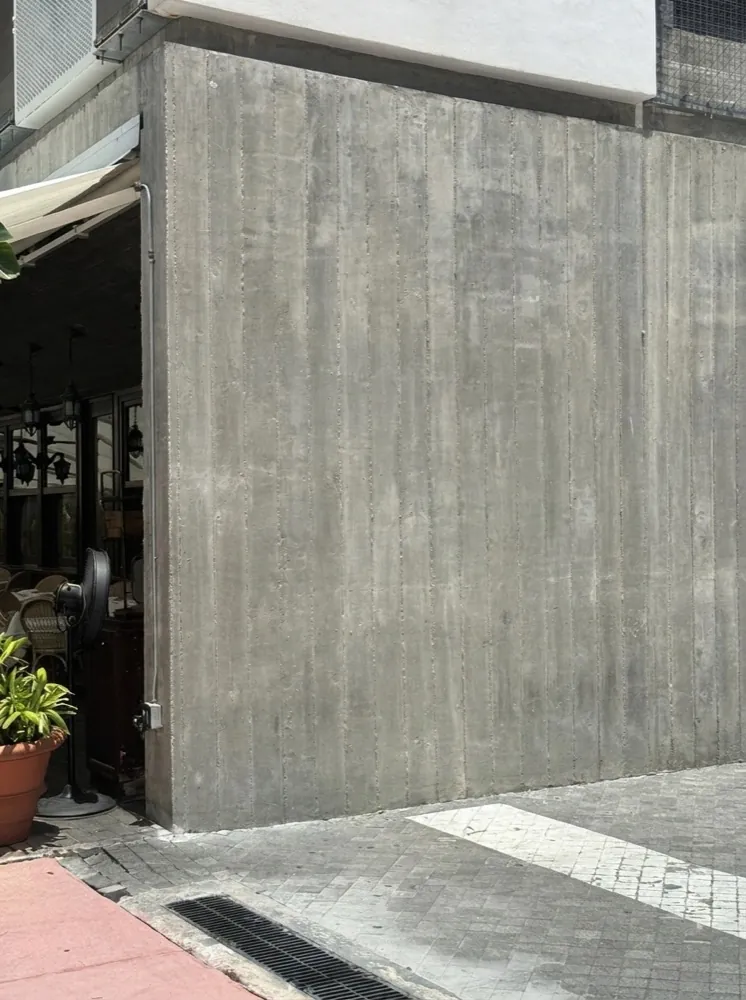
From experience, the best formwork — and the most common for houses — is wood, more precisely timber planks. For buildings, we add metal panels or bakelised plywood (too heavy for a house without machinery). At WALL, we bet on the safety and comfort of our teams: we mix the two when possible. And, personally, I find the marks of the timber planks on the raw concrete beautiful. The most important thing: a structure that's well formed and well sealed (so the concrete doesn't escape during pouring), then well vibrated to avoid segregation of the concrete.
Chapter 6
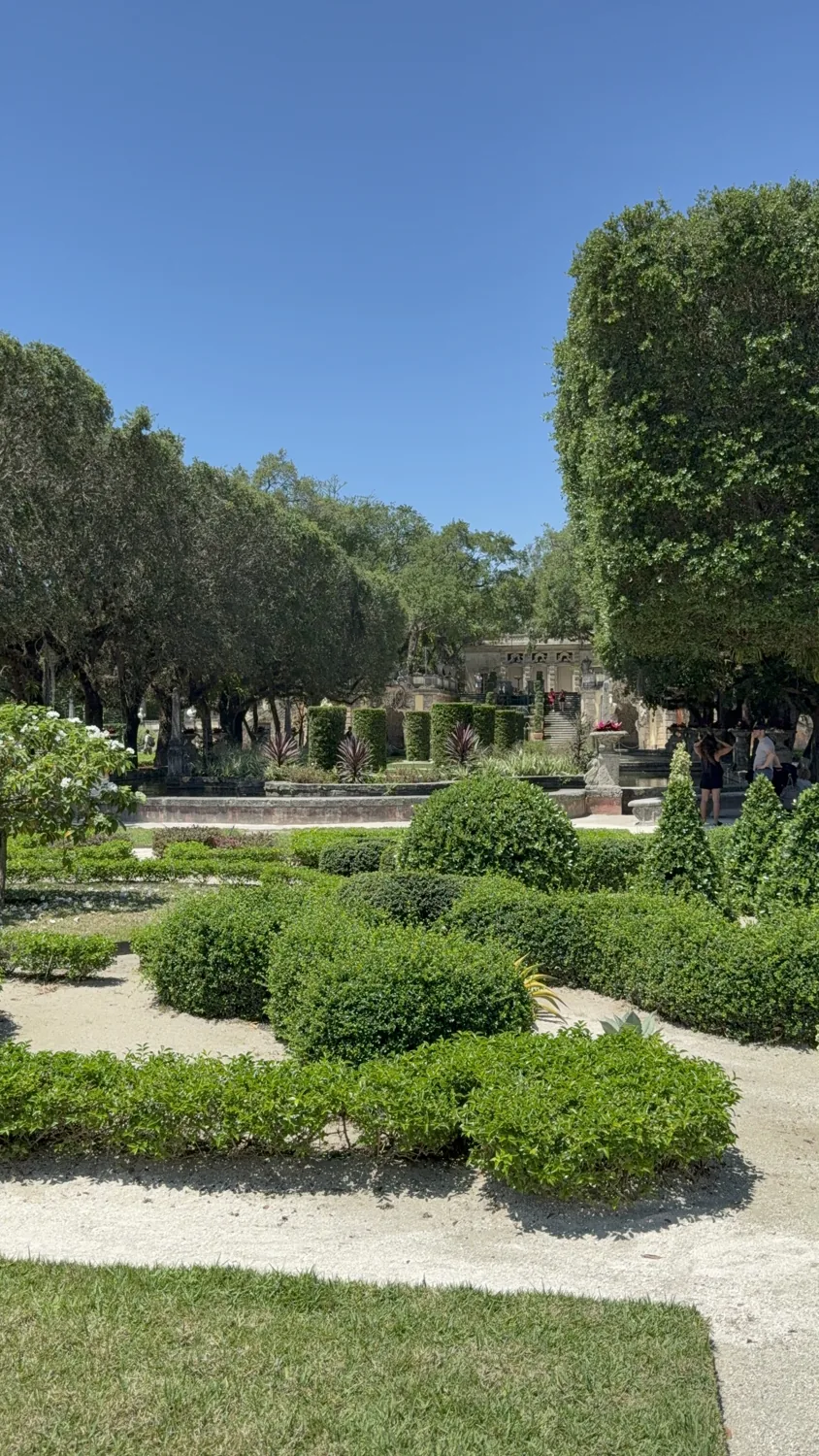
The garden
"The most underrated item. And the most important in my eyes."
The well-being and the soul of a house come largely from its garden. It's not just grass and trees: it's a thought, scents, contours, colours. A garden can hide overlooking, give fruit, bring coolness and well-being. For me, one doesn't go without the other — I'd even say that the garden is the most important thing in a villa. With more than three-quarters of sunshine in Marrakech, you'll make the most of it, believe me. Unlike concrete, a garden is alive… you'll never tire of it.
Favour the garden over the concreted area — besides, less concrete is cheaper: you gain garden and comfort. Call on a landscape architect: it's no nonsense, it's a real design that will enhance your house to an unimaginable degree. They'll know which plant to put, where and how, will think about maintenance, about the right lawn for summer and winter, about shaded areas, about the view, about privacy. How many houses have we seen with concrete everywhere… what a shame. Stand out: bet on your garden.
📌 Very important
Never put your pool right against the boundary wall, and always check its orientation. Leave space for a bit of garden behind, which will come to hide the wall. It's instantly more attractive.
Chapter 7
The schedule & the reality on site
"The delay, we'll forget. The result, no."
A villa project is at least a year, often more. For concrete benchmarks: with all the means and a well-prepared file, count on around 6 months of structural work for 300 to 500 m² without a basement, +2 months with a basement (earthworks, walls, waterproofing), and ~1.5 months per additional level. To finish the house completely, count rather on 12 to 24 months. And in Morocco, there are realities you don't imagine until you've set foot on a site:
The Eid periods: the country runs at a slow pace, or even comes to a standstill — count on at least 20 cumulative days in the year. Public holidays, which add up. Rain: sites stop (many workers come from far away, often by moped). Plan changes: each change means back-and-forth between the architect and the engineering office. Doing in order to redo takes time.
Let's be clear about my philosophy: I prefer a minimum of delay against a maximum of quality. The delay, you end up forgetting. The result, you'll have it before your eyes every day.
And the paperwork?
Good news: it's your architect who handles the paperwork. You handle access to water and electricity (we can support you). Two points you absolutely must not miss: having all the plans (without them, nothing moves forward properly) and water and electricity on the land — that can take an enormous amount of time, anticipate it as early as possible.
Chapter 8
The stages of a project
From buying the land to keys in hand, here is the logical order of a project — so you always know where you stand.
Buying the land
The first decision, the one that shapes everything else.
Your vision
Picture yourself there, sketch your home, even freehand. You'll already know what you don't want.
The architect
The preliminary design, the plans, the layout. The club president.
First meeting with the builder
Advice, feasibility, anticipating technical constraints — and picking up a few tips.
Engineering & inspection office
The structural plans (concrete, steel) and the safeguard that checks them.
Permits & taxes
The administrative part: 90% handled by the architect, the rest by you.
The builder's quote
A complete and honest estimate, framed by the CPS. You don't price a house in a day.
The surveyor
The precise positioning of the house on the land.
Earthworks & foundations
We prepare the ground and anchor the house.
Structural work
Concrete/steel structure, slabs, walls, staircases — by our own teams.
Roofing & waterproofing
We make the house watertight.
Second-fix work (technical trades)
Electrical, plumbing, air conditioning, plant room — by our own teams.
Finishes
Plasterboard/plaster, tiling, façade, renders: the detail that makes the difference, supervised by us.
Garden & outdoors
The soul and well-being of the villa.
Handover & delivery
The final checks, the insurances, and the handing over of the keys. 🔑
✅ The checklist before signing
- Complete plans: architect + engineering office finalised.
- A clear and complete quote that prices the whole project, not just the shell.
- The CPS — Special Specifications Document (not mandatory, but strongly recommended).
- The builder's insurances, track record and solvency verified.
- At least two sites visited from the same builder.
- An approved inspection office planned for.
- Your financing aligned with the progress.
The winning combo
A successful project rests on a few essential choices
A truly good architect
Not someone who copies a house seen everywhere, but who creates a villa tailored to your land, your budget, your lifestyle and your personality.
An experienced engineering office
Absolutely not to be overlooked. Sometimes 20,000 to 40,000 DH depending on the project — but it saves you far more in execution, time and peace of mind. Here, the cheapest can cost you dearly.
A serious inspection office
Because to err is human. A second technical eye prevents real problems: safety for you, for us, for the site.
A reliable builder
I could say WALL Construction… and I will say it 😁. But there are plenty of very good builders out there. What matters most: a structured, insured, solvent, transparent company.
A real landscaper
One of the most underrated items — and often what gives the soul, the freshness and the final value. I recommend Amine Ben Taher without hesitation: passionate, qualified, with his own nursery (more than 20 hectares). Go and visit, it's a pleasure.
And now, let's talk about your project
I hope I've pointed you in the right direction. You now have a method, some bearings, and above all a better idea of the pitfalls to avoid. The office is open, there's good coffee, and you'll leave with clear answers at the very least 😁. The first estimate is free.
We were the first in Morocco to offer a genuine cost simulator for free. And when I say simulator, I'm not talking about a simple Surface × Price/m² formula — anyone can do that. Ours is based on our on-site experience, our database and more than 10,000 lines of calculation, for an estimate closer to the reality of a building site.